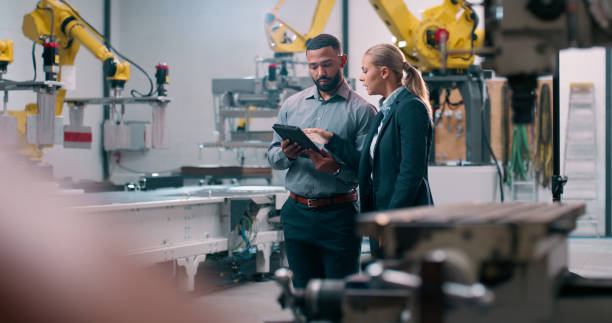

Ask any operations manager what keeps them up at night, and automation usually comes up within the first few minutes. Everyone has heard the promises about faster picking and lower labor costs, yet plenty of facilities still hesitate to make the jump. The truth is that warehouse automation works best when it is treated as an infrastructure project first and a technology purchase second.
That distinction trips up a lot of teams. It is tempting to shop for robots or conveyor systems the same way you would shop for a new forklift: compare specs, compare price, and place an order. But automation only performs as promised when the physical layout underneath it, the aisle widths, the beam spacing, and the floor flatness were designed with that equipment in mind from the start. Retrofitting a rigid old layout around new machinery almost always costs more than planning for it up front.
Labor concerns come up constantly too, and they deserve a straight answer. Automation rarely eliminates jobs outright. What it tends to do is pull workers away from repetitive lifting and walking tasks and put them into roles that require judgment, oversight, and problem-solving. Industry data connected to industrial automation resources consistently shows that facilities adopting automation still need skilled people, just fewer of them doing the same exhausting physical tasks day after day.
The technology itself has also gotten far more approachable than it used to be. A decade ago, automation meant a massive capital project reserved for the biggest distribution centers in the country. Today, smaller operations can start with a single conveyor loop or a handful of mobile robots handling one repetitive task, then expand once the return on investment proves out. That incremental approach removes a lot of the risk that used to scare smaller warehouses away entirely.
Growth trends back this up. Recent employment figures tracked through warehousing industry growth data show the sector adding jobs even as automation adoption climbs, which lines up with the idea that machines and people are increasingly working side by side rather than one replacing the other.
Where facilities tend to stumble is coordination. A shiny new automated storage and retrieval system does nothing for throughput if the racking around it cannot keep pace or if the warehouse management software cannot talk to the equipment cleanly. Automation is a system, not a single purchase, and every piece needs to be compatible with the pieces around it.
There is also a temptation to automate everything at once. In practice, the smartest rollouts usually start with the single biggest bottleneck, whether that is receiving, picking, or palletizing; prove the concept there; and let the results guide the next phase. Trying to overhaul an entire facility in one pass tends to create more disruption than the productivity gains are worth.
None of this means automation is a shortcut. It still requires planning, buy-in from the floor, and a willingness to adjust the physical space around new equipment. But for warehouses feeling the squeeze of rising order volume and a tight labor market, a well-planned rollout can be the difference between constantly playing catch-up and finally getting ahead of demand.
The best starting point is usually a simple audit. Track where your team loses the most time each shift, whether that is repetitive picking, slow receiving, or bottlenecks at palletizing, and let that data point you toward the first phase of automation. A small, well-chosen pilot project tends to build far more internal support than trying to sell an entire warehouse on a massive overhaul before anyone has seen a single result.