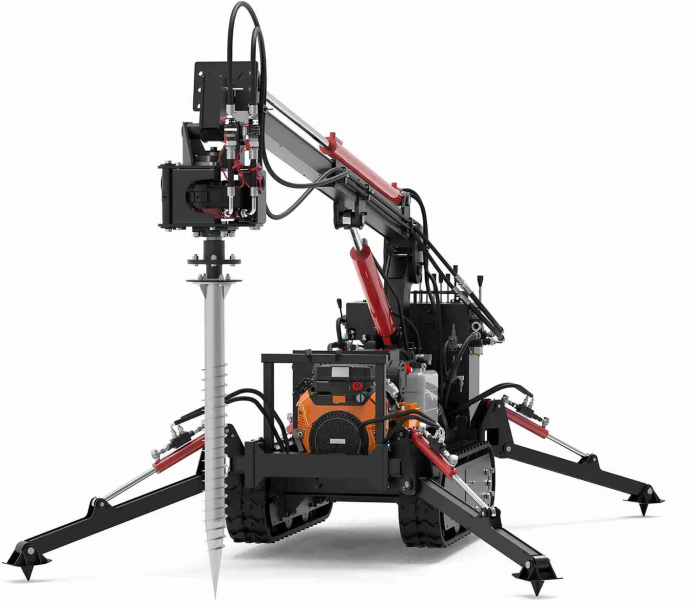

A screw pile foundation can be installed with relatively compact machinery, but the apparent simplicity of the process often conceals demanding engineering requirements. The equipment must rotate a steel pile into the ground while maintaining its intended alignment and overcoming changing soil resistance. Choosing an unsuitable installation system can result in interrupted work, excessive equipment wear and difficulties achieving the specified foundation design.
For contractors comparing machinery, the starting point should be the work the equipment will actually perform. Manufacturers such as Iron Mechanics offer different hydraulic solutions for screw pile installation, reflecting the varied requirements of residential and commercial projects. Understanding the differences between equipment configurations is essential before assessing purchase prices, engine specifications or advertised installation speeds.
A machine suitable for installing ground screws beneath a garden building may not have sufficient torque for larger structural piles. Conversely, equipment designed for heavier foundations can be unnecessarily expensive or difficult to manoeuvre on restricted residential sites. An informed selection process examines the relationship between ground conditions, pile specifications, machine capabilities and the contractor’s expected workload.
Start With the Foundation Design
Equipment selection should follow the structural and geotechnical requirements of the project rather than determine them. The foundation designer establishes the required pile configuration and performance based on anticipated loads, soil conditions and applicable engineering standards. Contractors then need machinery capable of installing the specified piles without exceeding the equipment’s operating limits.
Pile diameter is one of the first parameters to examine, although it does not independently determine the necessary installation torque. Helix diameter, shaft geometry, installation depth and soil resistance also influence the demands placed on the drive system. Two piles with similar shaft dimensions may behave differently during installation if their helical plates or ground conditions differ.
Ground investigation provides information that can substantially reduce uncertainty. Soil profiles may contain layers of clay, sand, gravel or other materials with different installation characteristics. The resistance encountered by a rotating pile can change as it advances, particularly where the ground contains dense layers or obstructions. A machine selected without reference to these conditions may have insufficient capacity to complete the installation.
Site geometry introduces another set of restrictions. Contractors should establish how much space is available for positioning the machinery, handling piles and moving between foundation points. Existing walls, overhead structures, underground services and neighbouring buildings can influence the installation method. A large machine may possess more than enough mechanical power while remaining unsuitable for the available working area.
The required number of piles also affects the decision. Installing a handful of ground screws involves different operational priorities from completing several hundred foundation points. For larger projects, travel time between positions, equipment handling and consistency of installation can have a substantial effect on labour requirements.
These considerations should be documented before requesting equipment quotations. A clear project specification makes technical discussions with manufacturers more productive and reduces the risk of purchasing machinery based on incomplete assumptions.
Understanding Torque and Hydraulic Performance
Torque is among the most frequently quoted specifications for screw pile installation equipment. It describes the rotational force delivered by the drive mechanism and is normally expressed in newton metres (Nm). Sufficient torque is necessary to overcome installation resistance, but the maximum advertised figure provides only part of the information needed to assess machine suitability.
The hydraulic system determines how effectively the drive motor can perform its work. Hydraulic pressure contributes to the torque that the motor can generate, while hydraulic flow influences rotational speed. Motor displacement, operating efficiency and gearing also affect actual performance. Consequently, two drive units with identical nominal torque ratings may differ in their speed, power requirements and operating behaviour.
Contractors should distinguish between maximum theoretical output and the conditions under which a machine can sustain useful performance. A brief peak torque rating does not necessarily describe the equipment’s continuous working capability. The manufacturer’s documentation should clarify operating pressure, required hydraulic flow and any limitations associated with prolonged use.
The relationship between torque and installation depth also deserves careful interpretation. Some engineering methods use measured installation torque as part of estimating pile capacity, provided the pile system and relevant correlations have been appropriately validated. However, a high torque reading alone does not establish that the finished foundation satisfies its structural design. Ground conditions, pile geometry, installation records and the specified verification procedure remain essential.
Hydraulic compatibility becomes particularly important when choosing attachments powered by existing construction machinery. An excavator may have sufficient engine power but still lack the required auxiliary hydraulic flow or suitable pressure characteristics. Incorrect connections or operating settings can reduce performance and potentially damage components.
Before committing to a purchase, contractors should obtain a clear technical specification rather than relying on a single headline figure. The combination of torque, operating pressure, flow, rotational speed and duty requirements provides a more realistic picture of what the equipment can achieve.
Comparing Different Installation Systems
Screw pile installation machinery is available in several configurations, each offering practical advantages under particular conditions. The most appropriate system depends on the relationship between installation requirements and site logistics.
Four common options illustrate the main differences.
- Handheld hydraulic drivers are generally intended for smaller installation tasks and locations with restricted machinery access. Their suitability depends on torque requirements, operating arrangements and the safe management of reaction forces.
- Excavator-mounted drivers use compatible carrier machinery to position and rotate piles. They can be attractive to contractors who already operate suitable excavators and require an attachment rather than a separate installation machine.
- Independent hydraulic drive heads provide a flexible solution for integration with compatible hydraulic equipment or purpose-built installation arrangements. Their performance depends on the available power source and mechanical configuration.
- Self-propelled tracked machines combine an installation drive with a mobile platform. They can reduce the need for separate positioning machinery where numerous piles must be installed across a site.
Handheld equipment offers an advantage where access is limited, but it should not be selected solely because of its compact dimensions. Reaction torque must be controlled safely, and the installation arrangement must remain stable throughout operation. Tasks involving higher resistance may require equipment with more substantial support and positioning capabilities.
Excavator-mounted systems have different strengths. Where a suitable excavator is already present, a compatible hydraulic attachment can make efficient use of existing machinery. The excavator’s reach and manoeuvrability may also help with pile positioning. However, the carrier must be appropriate for the attachment, and operators need to understand the forces transmitted during installation.
Self-propelled machines can be valuable on sites requiring frequent movement between pile locations. A tracked chassis may provide practical mobility over certain uneven surfaces, while an integrated positioning arrangement can simplify repeated operations. Nevertheless, tracked equipment still requires adequate bearing ground, safe operating clearances and suitable transport arrangements.
Independent hydraulic drive heads may appeal to businesses with specialised equipment or unusual installation requirements. Their flexibility can be useful, but integrating them into an existing machine requires careful assessment of hydraulic performance, mounting arrangements and operational safety.
Rather than ranking these systems by size or price, contractors should assess how each would perform within their established working procedures. The best option is the one that can reliably complete the required installations without creating unnecessary logistical or operational difficulties.
Reliability Depends on More Than Build Quality
Construction machinery operates in environments where dust, moisture, mud and repeated mechanical loading can affect performance. Screw pile drivers face additional demands because resistance may change suddenly during installation. Reliable operation therefore depends on appropriate machine design, correct use and systematic maintenance.
Hydraulic components require regular inspection. Hoses, fittings and seals must remain in suitable condition, while hydraulic fluid should meet the manufacturer’s requirements. Contamination can accelerate wear in pumps and motors, potentially leading to reduced performance or expensive failures. Operators should recognise the warning signs of leaks, overheating and abnormal equipment behaviour.
Mechanical connections deserve similar attention. Drive couplings, adapters and mounting components transfer substantial forces between the machine and the pile. Excessive wear or incorrect assembly can compromise installation accuracy and introduce safety hazards. Inspecting these components before work begins is generally less disruptive than discovering a problem during an installation.
Service support should influence equipment selection, particularly for contractors working across several regions or countries. Before purchasing machinery, buyers should establish whether replacement components are available and what technical assistance the manufacturer can provide. Written maintenance instructions and clear component specifications can simplify routine servicing.
Operational reliability also depends on staff training. An experienced operator who understands the machine’s limitations can recognise unsuitable working conditions and respond before minor difficulties develop into major failures. Equipment should never be forced beyond its rated capacity simply to complete an installation.
A well-maintained machine may deliver many years of productive service, but its useful life depends on operating conditions, workload and maintenance practices. Claims about durability are most meaningful when supported by appropriate technical documentation and relevant operating experience.
Evaluating the Real Cost of Equipment Ownership
The purchase price of a screw pile driver is only one part of its financial impact. Contractors also need to consider transportation, fuel, servicing, operator training, insurance and the costs associated with machinery downtime. These expenses can influence the profitability of a foundation installation business as much as the initial investment.
Equipment utilisation is particularly important. A contractor completing several installation projects each month may be able to spread ownership costs across a substantial number of jobs. A business undertaking only occasional screw pile work may find that equipment hire or subcontracting provides greater financial flexibility.
Daily productivity should be assessed realistically. Installation time depends on ground conditions, pile specifications, positioning arrangements and the need for quality checks. Manufacturers’ performance claims may be useful as preliminary information, but contractors should not treat them as guaranteed production rates.
A practical financial assessment can compare the costs of machinery ownership against the price of hiring equipment or employing a specialist installation subcontractor. The calculation should include realistic annual operating hours and an allowance for maintenance and unexpected interruptions. It should also consider whether owning the equipment would allow the business to undertake additional projects.
Residual value and long-term serviceability matter for businesses planning to replace equipment after several years. Machinery with accessible spare parts, documented maintenance procedures and consistent operating performance may be easier to manage throughout its ownership period. However, resale value should not be assumed without considering local demand and the condition of the specific machine.
The final purchasing decision should combine financial analysis with technical suitability. Equipment that appears economical on paper may become expensive if it cannot complete the contractor’s typical installations or repeatedly requires additional machinery.
Making a Decision Based on Practical Evidence
Once the main technical and financial requirements have been established, contractors should compare a shortlist of suitable machines using consistent criteria. Manufacturer specifications provide a foundation for this comparison, but practical demonstrations and evidence from comparable projects can offer valuable additional information.
A demonstration should reflect the intended use as closely as possible. Testing equipment under favourable conditions alone may reveal little about its performance on more demanding sites. Buyers should consider the installation resistance, pile dimensions, working clearances and repositioning requirements they are likely to encounter during normal operations.
Compatibility with existing vehicles and tools is another consideration. Transport arrangements, lifting equipment, pile adapters and available hydraulic connections can affect how easily a new machine fits into the business. These details are often overlooked when purchasing decisions concentrate primarily on torque and engine power.
Safety documentation and operating instructions should be reviewed before purchase. Contractors must understand the machine’s operating limits, maintenance requirements and procedures for managing hazardous conditions. They should also establish whether additional training or site-specific controls will be necessary.
A reliable screw pile installation system is ultimately one that performs the required work consistently, safely and at a sustainable cost. Selecting it requires more than comparing technical tables or choosing the lowest quotation. By beginning with foundation design requirements and testing equipment against realistic operating conditions, contractors can make investment decisions that support both construction quality and the long-term needs of their business.